Wednesday, October 2, 2019

This Psychologist Thinks Dog Owners are Cruel because they Have Jobs


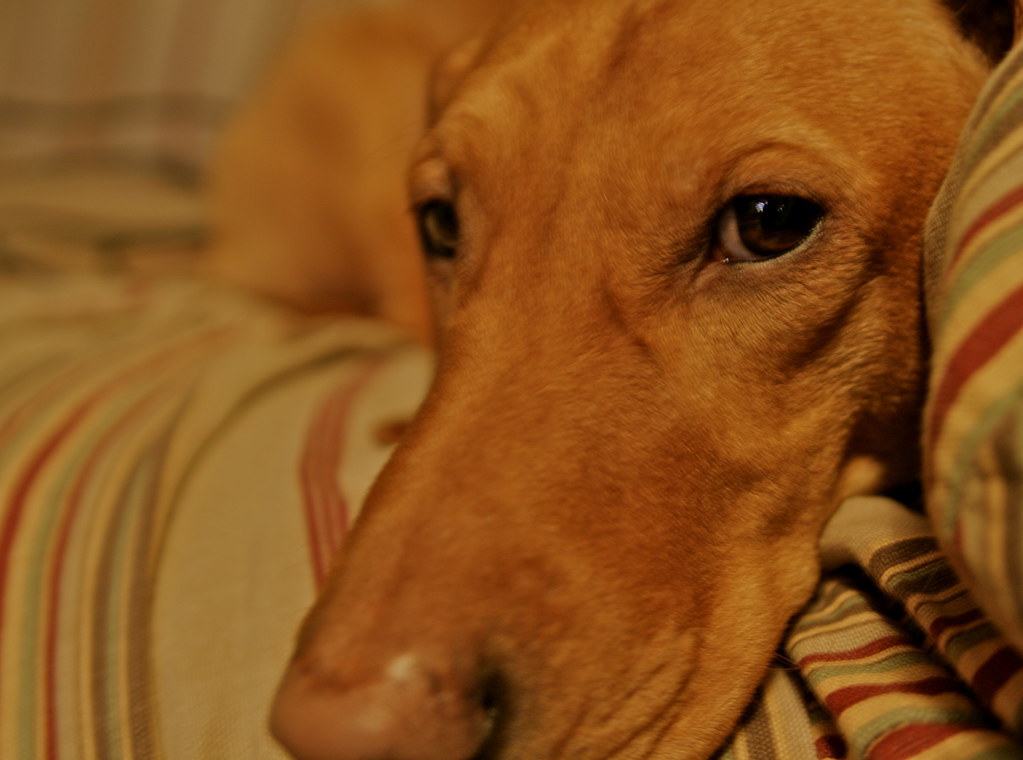
Oscar
"Oscar" by JHanson12 is licensed under CC BY 2.0


‘Adopt Don’t Shop’ is a popular mantra used to push prospective dog and cat owners to avoid pet stores and breeders and instead choose a pet from a shelter or rescue so as not to add to the number of homeless animals. This movement has made enormous strides as of recent and millions of dogs have been adopted, prompting even some rescues to start importing foreign dogs (those who are anti-adoption promotion often use this is an excuse to discredit the movement, rather than credit it for its success).


The dog population appears to no longer be at such a critical mass that it is increasingly common for many dog rescues (mostly desirable breed-specific rescues) to ‘hold’ onto dogs, opting to take whatever amount of time necessary to find them the ‘perfect’ home. Seems reasonable, except perfect often means a child-free, financially affluent, large fenced backyard-having home with owners who are retired or able to work from home and have at least 10 years of experience with the breed at hand.


This kind of nuttery neutralizes the point of a ‘rescue’ since either the breed being ‘rescued’ is so rare or valuable that there is no risk for it not getting adopted (which makes it a non-rescue), or the rescue is snubbing needy dogs because of their impossibly high standards.


Not only do we have snobby dog rescues to contend with, but there are also some members of the scientific community who are (sometimes unknowingly) spreading animal rights garbage based on their own emotions. It’s a sobering reminder that not even dog owners are safe.


Clive Wynne is a psychologist and founder of the Canine Science Collaboratory, and he shockingly appears to NOT be an animal rights nut. He even makes an excellent point in his book Do Animals Think? That sounds like one of those fake science books that exist just to advocate for animal rights with BS claims that animals are spiritual, have their own special language, or are equivalent, just different, to humans, but it surprisingly appears not to be (in other words, he’s another accidental animal rights activist). I haven’t read the book, but I definitely agree with the following:


In this provocative book, noted animal expert Clive Wynne debunks some commonly held notions about our furry friends. It may be romantic to ascribe human qualities to critters, he argues, but it’s not very realistic. While animals are by no means dumb, they don’t think the same way we do. Contrary to what many popular television shows would have us believe, animals have neither the “theory-of-mind” capabilities that humans have (that is, they are not conscious of what others are thinking) nor the capacity for higher-level reasoning.


Engagingly written, Do Animals Think? takes aim at the work of such renowned animal rights advocates as Peter Singer and Jane Goodall for falsely humanizing animals.


This makes it all the more sad that Dr. Wynne has written this stupidity in a recent article about his research on dog minds:

Dogs gave up their free-ranging, roaming, hunting lives in order to hitch their wagon to ours, and I think that implies duties toward them. You know your dog needs feeding. Most recognize that dogs need exercise. The thing that upsets me is that people don’t give enough thought to the fact that a large part of what makes it so wonderful to live with a dog is your dog’s social nature. You come home and there’s at least somebody who’s happy to see you.

So I think the cruelest thing that we routinely do to our dogs is leaving them home for eight, 10, 12 hours a day. If your life is such that your dog is going to have to be left alone for more than four hours routinely, then you should reconsider whether you have a life that a dog can comfortably fit into.

According to Wynne, leaving your dog home alone for 8-12 hours per day is cruel—wait, no, scratch that—more than four hours. How he arrived at this arbitrary number is anyone’s guess. There is no evidence presented for this statement in the article. What he does say in the article is that dogs move on more easily than humans, that dogs care enough about their owners that they feel distress when we express distress, and that the reward centers of their brains light up when their owners are nearby. 

As far as I know, he has no evidence for the amount of time a dog can tolerate without its owner, or even if there is any difference in the dog brain between 4 hours and 8 hours. In my experience, their reaction to my return seems to be the same. 

Wynne has pretty much stated that he believes most dog owners are cruel because they leave their dog alone for more than 4 hours routinely. Surprisingly, most owners do this because they need to go to work and make enough money for themselves and their dogs so that their pets can eat and receive expensive veterinary care. 

Wynne seems to agree with the rescue snobs that only highly privileged people—those who are financially secure retirees, people who work from home, or people who are permitted to bring their pets to work—should be ethically allowed to have dogs.

Wynne also says that “dogs have a special capacity to form relationships with anything”. Doesn’t this make the case that even if he does feel that dogs simply can’t go without a social partner for an arbitrary amount of time, that getting two dogs can be an option for people who work? He also says that you can hire someone to walk your dogs during the day. 
 But the thing about dogs is they make friends so easily. You can have a neighbor or a friend come, or you pay a dog-walking service. That’s part of my whole point here. Your tame wolf will probably not be interested in having a stranger come and take them out. But your dog will.
As a former dog caretaker and walker, I can tell you that this would cost you about $50 a week and that in my case, you would get about 30-45 minutes before I run out the door. In order to meet Lynne’s requirements, for an 8 hour shift, your dog walker will have to stay there for four hours. So again, this is arbitrarily chosen that a half hour of socialization would somehow make an 8 hour shift go from unbearable to bearable. 

My dogs in particular would never care about a stranger showing up to walk them; they would want to be with their real owners. Some dogs enjoyed my presence, while others cowered in fear of me.
Regardless, while I know dogs love being with their owners and sometimes other people, I have no idea why Clive Wynne would come to the dramatic and arbitrarily chosen conclusion that it is CRUEL to subject dogs to periods of loneliness.

Most dogs sleep a good portion of the time that they are alone and will conveniently forget about the ‘trauma’ of their owner leaving if you give them a chew bone. The thing is, while unpleasant, I think they can handle it, the same way humans have to handle things they don’t like, like working so that their pets can eat. Wynne may want to refrain from making claims that only a teeny percentage of people should own dogs based on no evidence, especially considering the ramifications for shelters dogs who would love to be treated ‘cruelly’ and find a home.

Saturday, September 21, 2019

PETA Goes After Robert Irwin and The Tonight Show

Australia Zoo Entrance-3=
"Australia Zoo Entrance-3=" by Sheba_Also 43,000 photos is licensed under CC BY-SA 2.0


PETA is predictable.

In their never ending quest to normalize anti-exotic animal captivity, they have now extracted publicity by going after some of the more famous and prominent figures in the industry. Recently, they’ve garnered the animosity of the general public by criticizing the late Steve Irwin on his birthday. Unphased by the vitriol, they are now taking aim at his son and demanding that 'unqualified' individuals should not be permitted to interact with exotic animals.

PETA doesn’t actually care about public safety, of course.

Being the manipulative, slimy, zealots that they are, they are using the misguided laws that have been penned to keep the public away from ‘dangerous’ exotic animals as a way to enforce their view that the public should never come into contact with non-domestic animals and that captivity should end. By keeping the public and exotic animals separated, PETA can dismantle the structure of the exotic animal industry brick by brick.

Therefore, they pretend they are worried about ‘non-qualified’ people handling exotic animals, and this just shows why there shouldn’t be such laws in the first place. 

Can the Irwins help people realize this?

While hating exotic pet owners and zoos appears to be on the rise, much of the same people who hold these beliefs have a soft spot for the Irwin family. This is evident in that Robert Irwin can still utilize exotic animals for entertainment without a resulting public outcry.

So, PETA has stepped in to try and fix that.

"Animals suffer every time they're exposed to the chaos of a television set and passed around like props"

Of course, much of the animals on these programs exhibit a level of calm that I envy and wish my dog (or even myself) had when going on public outings, but surely they must be ‘suffering’. Most people might laugh at PETA’s statement, yet judging zoos and exotic pet owners in the same exact way has become mainstream.

I have to reiterate again that much of the anti-captivity sentiment is bafflingly coming from the exotic pet owners themselves.

For instance, Grant Kemmerer is the exhibitor who has rented out the animals to The Tonight Show for Irwin to display. The general public often thinks that these animal visitors come from respected zoos and may be surprised to find out that they almost always originate from the exotic pet trade.
Kemmerer has obtained the necessary licenses to conduct his business but I see no mention of any special credentials to work with exotic animals.

Kemmerer doesn’t outright denounce people keeping exotic animals as pets, but he does fib a little on his webpage. 

He says:

“There is a misconception sometimes with the public that you can go online and buy an exotic animal and have it delivered to your door. This is simply not true, even websites that show animals for sale are only doing business with legal buyers and sellers, i.e. people with proper licenses and/or permits.”

Not true, I’ve purchased several ‘exotic animals’ without any licenses (nor should I need them) and have even recently had them delivered to my door (with animal transporters). This may be mostly true for large cats, bears, and other obviously dangerous animals (but not always). He also says:

“We support the permits and processes required for legal ownership since these animals in the wrong hands can be dangerous and have very specialized requirements for proper care.”

Kemmerer is being intentionally vague. He must know that the “permits and processes” vary by state, region, and municipality and in some areas, might even make it impossible for him to conduct an exotic animal business. Some laws are lenient, others stringent, and others non-existent. No two are the same.

Yet Kemmerer is trying to reassure visitors to his website that the evil exotic pet trade, as envisioned by the disciples of Big Cat Rescue and similar organizations, is well-regulated and ‘regular’ people can’t get their hands on unspecified ‘exotic’ animals. And of course, he supports these various laws, as long as they don’t affect him.

In almost every case people like Kemmerer began their careers as inexperienced exotic pet owners with no formal education in animal care or even the loosely related animal sciences.

It’s normal and expected for these same people to denounce the exotic pet trade (often to a much less subtle degree than Kemmerer has) in order to pander to the public so that they can feel good about enjoying the animal interaction without supporting a hidden exotic pet-owning criminal.

If only the public would stop unknowingly agreeing with PETA’s ideology while scoffing at their attempts to shame the Irwin family, then they might see that behind the Irwin’s glowing smiles, they are ‘guilty’ of the same sins as those detestable, faceless exotic pet owners.

Friday, August 9, 2019

The Lion King Fails Because of Fake ‘Animal Actors’


The death of Mufasa scene, leaked online, has to be one of the most cringe-inducing scenes
.


Is the new 2019 version of The Lion King live action or animation?

For some reason, people keep endlessly debating this, and even the film’s director Jon Favreau doesn’t seem to be sure.


“It’s difficult, because it’s neither, really.

There’s no real animals and there’s no real cameras and there’s not even any performance that’s being captured,” Favreau acknowledged. “There’s underlying [performance] data that’s real, but everything is coming through the hands of artists.”

 Favreau, however, thinks his film shouldn’t be considered an animated film simply because the characters aren’t stylized; instead, he wanted it to come off as “a BBC documentary, albeit one where the lions talk and sing.”

Which is actually pretty stupid.

The 2019 Lion King has, for the most part, opened up to mostly negative reviews from critics. As of right now it stands at a 53% negative rating on Rotten Tomatoes with 372 reviews, making it more poorly reviewed than Disney’s earlier ‘updated’ release  of Aladdin, and it is facing much ridicule by every Youtube review I’ve come across.
  
Of course, die hard Lion King fans are more forgiving, and the audience rating for the film on Rotten Tomatoes sits at a current 88%, which isn’t much of a shock. The film is also dominating at the box office and has already crossed the billion dollar mark worldwide, a feat it seemed destined for, reviews by darned.

From all of the reviews that I’ve read and watched, there seems to be 2 consistent complaints—the main one being that this film is a ‘shot-for-shot’ re-make that is unnecessary and artistically hollow, while the other is that the animal characters lack emotion.

I have not yet seen the film, however from the clips available online I can make a pretty safe guess that this re-make is awful.

 I was initially excited about the idea of a ‘live action’ film with only animals because it sounded unique. My thoughts were that this film would be live action only in the sense that it utilized CGI only when necessary, such as with Disney’s well-received re-make of The Jungle Book (also directed by Favreau), but since CGI is necessary for all of the characters, it would be more akin to Disney’s Dinosaur, which utilized real backgrounds. No one contests that Dinosaur is animated.
  
However, to my surprise, The Lion King was 100% CGI, except for one measly shot, the iconic sun rising over the savannah in the beginning, which was really done for Favreau’s amusement rather than for any artistic intentions. I expected at least the backgrounds to be real, and there was a missed opportunity to put real footage of African wildlife. Instead, the non-speaking background animals had the pixel-induced, streamlined fakeness of the main characters.

I wondered why. I know Disney has stopped using real ‘exotic’ animal actors in its productions to adapt to the entrenched animal rights ideology of today's society. They could however have filmed live animals without disturbing them in any way. Perhaps this was done because the presence of real animals would make the CGI stand out like a sore thumb. 

Despite the advances in technology, side by side, the differences between CGI and real animals will be apparent.

Ironically, I think many of the reviewers complaining of The Lion King’s non-originality are missing the point. This likely terrible film is original. I can see that the creators have really committed to making these animals not only look realistic, but also act like real animals. 

Observe the changes in The Circle Of Life. 


  • Sarabi, Mufasa, and Rafiki's happy faces are gone. 
  • Rafiki doesn't hold a stick like a human.
  • Mufasa and Rafiki don't hug.
  • Rafiki sits when he presents Simba, instead of standing like a human. As a result, Simba is just 'thrown' up and the great zoom in and edit to Simba rising from the animated version is gone.

Viewers have noted that the popular ‘Be Prepared’ sequence has been watered down (no goose-stepping hyenas), Timon doesn’t dance the hula (he literally just stands there, signing a different Disney-inspired song), and in the ‘Hakuna Matata’ sequence, Simba, Timon, and Pumbaa just walk throughout the whole thing. All of the 'cartoon action' is absent.

It’s clear to me that the creators wanted a real animal interpretation of The Lion King, and while they have succeeded with their commitment, it really was an abysmal failure of an idea. Real animal behavior adds nothing of value to this very human-esque, Hamlet-inspired musical. 

Many of the most important scenes that are supposed to be the most dramatic and emotionally devastating come off as looking silly as a result. The realism amounts to an expensive gimmick.

There may also be a hidden agenda to this awful decision to remove the anthropomorphic qualities of these characters.

The film’s director has been lauded by PETA for using no animal actors in The Jungle Book and has now been praised for doing the same with The Lion King, even having a ‘rescued’ lion named after him. Favreau had apparently said:


"The fact that technology can make it look so photo-real, it becomes harder and harder to make a case that you need to actually put animals in danger when making movies."


I’m guessing Favreau was only referring to movie studios that have gargantuan budgets to play with.
Regardless, the new Lion King film is definitely animated, although it is pretending to be otherwise. I find it interesting that while real animals certainly lack expression, I find real animal actors to be more effective for some reason, such as in this scene from Homeward Bound, a great 90’s film.


Disney’s movies are changing with the times. Another ‘improvement' made to The Lion King was an obvious pandering attempt to make the cast predominately black, as though black Americans are needed to represent African animals, something everyone in the black community should be insulted by, but I digress.

Unfortunately, along with screwy social cajoling, animal rights appear to be the new ‘standard’ of morality for films, as the thankfully critically-reviled, flopped Dumbo remake has shown us.

Sunday, August 4, 2019

Banning Iguanas as Pets Will Not Save Florida


"Green Iguana, Costa Rica" by CarolineG2011 is licensed under CC BY-SA 2.0


I’ve recently stumbled upon this article that was a response to the proliferating green iguana population in Florida and the Florida Wildlife Commission’s (FWC) now revised declaration to “kill green iguanas on their own property whenever possible”. 

The Sun Sentinel writer writes:


“I’m grateful you included recommendations by biological anthropologist Barbara King for what to do about iguanas. Dr. King rightfully points out that as long as exotic species are bred, sold, bought and imported, this problem will not go away.

The pythons that thrive in our Everglades were dumped there because people who had to have a novelty pet grew tired of them. The same goes for iguanas. It's not the animals' fault that they managed not only to survive, but to flourish."


This again exemplifies the mentality of my earlier post that states people don’t like exotic pet owners simply because their pets aren’t common. You can see how the statement “had to have a novelty pet” is just dripping with spite, and for what?

So iguanas and other reptiles haven’t been kept as pets as long as ‘traditional’ pets like dogs and cats, and that for some reason makes them a “novelty” and this is a terrible thing? 

Furthermore, people neglect, abandon, and cruelly treat non-novelty pets as well.

Many of those said non-novelty pets have become a severe environmental problem, one that easily exceeds the damage that iguanas, which are restricted to a small portion of Florida, cause. So I’m not understanding where the outrage is coming from.

And then, perhaps even more frustratingly insidious is the implication that the writer is making, which mirrors the mentality of the people whom not only seem not to care about the damage that ‘traditional’ pets cause, but they also plead for us to cease our efforts to effectively control them.

Just as the cat nutters absolutely refuse to support (or at least, stop feverishly trying to undermine) any protective measures that involve euthanizing cats, this author is implying we shouldn’t remove the iguanas at all, but rather, just strip exotic pet owners of their freedoms (“it's not the animals' fault”) and leave all else be.

Apparently, making it illegal to own iguanas will make them magically disappear.

The Sun Sentinel describes the FWC as giving the exotic pet industry a “free pass”, despite the fact that Florida has plenty of regulations for exotic animal possession, exotic pet amnesty days, and stringent laws against releasing exotics. Sure, the problem still exists, just as any law can't fully annihilate offenders from offending.

Just because one species is not completely illegal is not a “free pass”, that description better fits the cat and dog industry.

The Sun Sentinel writer’s sentiment is in agreement with Barbara King, whom unsurprisingly has written books on animal cognition and 'emotion' (always a huge red flag, these books are often pseudo-scientific arguments for animal rights). The ‘biological anthropologist’ states:


“It’s banning the commercial import, sale, and breeding of the iguanas in Florida that would be the effective and ethical action to take.
The pet trade is a main reason why these iguanas end up roaming in the wild, and it should be regulated. It's completely disingenuous of the FWC to claim that it's working in the best interest of Florida's citizens when it won't do what is required by a commitment to both conservation science and to the compassionate treatment of animals.”


Both writers seem to indirectly suggest that the iguanas should not be removed.

It is essentially the height of nuttery for these two individuals to believe that banning iguanas as pets will resolve the issue without killing any of them, and it is a stunning example of how even a person with presumed scientific credentials will listen to their emotions over logic.

Furthermore, Florida is (surprisingly) working in the interest of the public. Iguanas are popular pets and thus Floridian officials understand that banning them is not only likely to be ineffective, but also isn’t right, just as it wouldn’t be right to ban invasive domestic felines (but it would be incredibly logical to ban people from allowing them to roam wherever they want, they need to work on that).

An iguana ban won’t stop the lizards from being smuggled from other states illegally, and their illicit status would likely encourage even more releases. A ban also won’t stop iguanas that may be entering the state as stowaways from plant shipments [6], a possible method of introduction that is overlooked when people focus on disparaging exotic pet owners.

These two writers appear to simply be opportunists looking at the green iguana issue as a chance to push animal rights ideology. How else can anyone explain the lunacy of their call to take away rights from humans while protecting the invasive iguanas, an idea that will surely not diminish their population?

Will banning iguanas as pets help reduce their population? Only if it is done in conjunction with aggressive removal efforts—in other words, the very control measure these two half-wits are arguing against, unless they can come up with thousands of homes for the 6 foot wild reptiles.

It is also interesting to note that iguanas have been so successful in the wilds of Florida because of the ornamental, non-native plants that humans favor [1][5]. The exotic plant trade is never viewed with the same disdain that the exotic pet trade is, even though herbaceous invasive species are just as big of a problem.

Green iguanas are not proliferating in the wilds of the Everglades because of the lack of suitable vegetation and the heavy presence of natural predators. Human-disturbed environments loaded with the unnatural plants that iguanas love and the removal of predators like raccoons [1][2][3][4] is the reason why iguanas went from a few small populations in the 1960’s to exploding in the 1990’s [1].
   
It is not just evil exotic pet owners whom have admittedly contributed to ecological upset, but rather, a synergy of human impact. Naturally of course, we get all the blame, and it is suggested that ridding us of our pets will make all right with the world again.


  1. Meshaka Jr, Walter E., et al. "Green Iguanas (Iguana iguana): the unintended consequence of sound wildlife management practices in a south Florida park." (2007).
  2. Meshaka, Walter E., et al. "Raccoon (Proycon lotor) removal and the rapid colonization of the green iguana (Iguana iguana) on a public land in South Florida: A conservation opportunity for the Caribbean." Caribbean journal of science 45.1 (2009): 15-20.
  3. Meshaka Jr, Walter E., Richard D. Bartlett, and Henry T. Smith. "Colonization success by green iguanas in Florida." Iguana 11.3 (2004): 154-161.
  4. Smith, Henry T., et al. "Raccoon predation as a potential limiting factor in the success of the green iguana in southern Florida." (2006).
  5. Smith, Henry T., Elizabeth Golden, and Walter E. Meshaka Jr. "Population density estimates for a green iguana (Iguana iguana) colony in a Florida state park." Journal of Kansas Herpetology 21.21 (2007): 19-20.
  6. Townsend, Josiah H., Kenneth L. Krysko, and Kevin M. Enge. "Introduced iguanas in southern Florida: a history of more than 35 years." Iguana 10.4 (2003): 111-118.